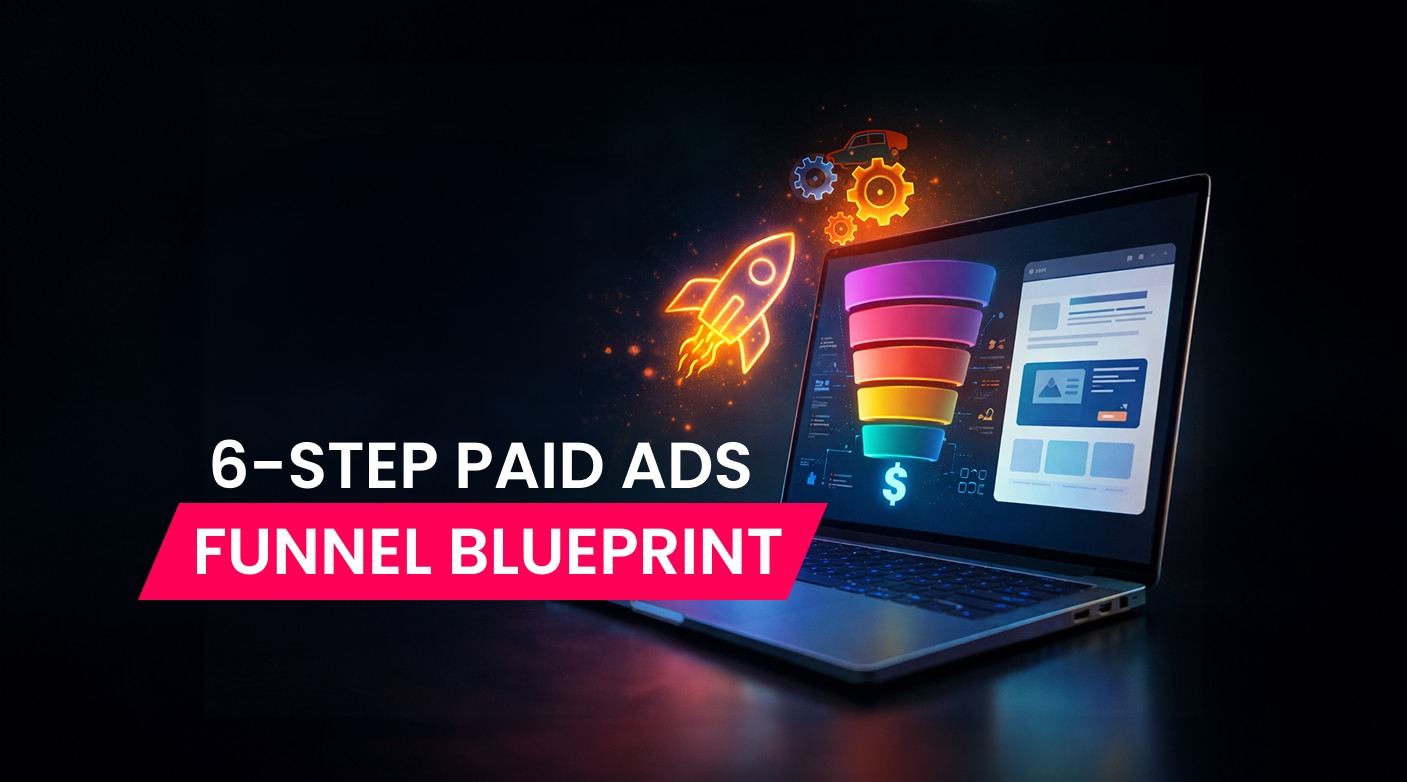
Running paid ads without a structured funnel is one of the fastest ways to burn budget. Traffic alone does not create revenue. What happens after the click is what determines whether your ads scale or stall.
High-performing brands treat their funnel like a silent sales expert. Every step removes friction, builds confidence, and guides the prospect forward with intention.
Paid ads do not fail because of traffic quality. They fail because the funnel does not do enough work after the click.
This guide breaks down a six-step funnel and landing page blueprint designed to increase ROAS, lower CPAs, and turn cold traffic into confident buyers.
Why Funnels Matter More Than Ever for Paid Ads
As ad costs rise, brands can no longer rely on simple product pages and generic checkout flows. Successful acquisition today requires a guided experience that does the selling for you.
A well-designed funnel:
- motivates prospects to keep reading
- clearly communicates value
- reduces confusion and hesitation
- handles objections before they arise
- removes anxiety at checkout
Your funnel should feel like a conversation that answers questions before the customer asks them.
Step 1: A Strong Hero Section
The hero section sets the tone for the entire experience. Within seconds, visitors should understand what you offer, who it is for, and why it matters.
A strong hero includes:
- a clear value proposition
- one focused outcome or benefit
- a simple primary action
If the hero does not immediately connect, the rest of the funnel rarely gets a chance.
Step 2: Persuasive, Outcome-Driven Copy
Effective funnel copy focuses on transformation, not features. It shows prospects where they are now, where they want to be, and how your product bridges the gap.
High-converting copy:
- addresses real pain points
- uses simple, conversational language
- shows the desired end result
People do not buy products. They buy outcomes and relief.
Step 3: Build Trust Before Asking for the Sale
Cold traffic does not trust brands by default. Trust must be earned quickly through proof.
Effective trust builders include:
- customer reviews and testimonials
- before-and-after examples
- media mentions or brand logos
- real people using the product
The goal is to show that others have already gone first and succeeded.
Step 4: Handle Objections Proactively
Every buyer has hesitation. High-performing funnels address these concerns before they turn into drop-offs.
Common objections include:
- Does this actually work?
- Is this right for me?
- Is it worth the price?
- What happens if it doesn’t work?
FAQs, comparison tables, and clear explanations help remove doubt and keep momentum moving forward.
Every unanswered objection quietly pushes a customer closer to leaving.
Step 5: Create an Irresistible Offer
An irresistible offer is not always about price. It is about perceived value.
Strong offers often include:
- bundles that feel like a no-brainer
- tiered options that anchor value
- bonuses that increase urgency
- clear savings compared to buying separately
The best offers feel generous, simple, and easy to justify.
Step 6: Remove Anxiety at Checkout
Checkout is where many funnels lose momentum. Even interested buyers hesitate if uncertainty creeps in.
Reduce checkout anxiety by:
- clearly displaying guarantees
- communicating shipping expectations
- showing return or refund policies
- reinforcing trust and support
The final step of the funnel should feel reassuring, not risky.
Why Custom Funnels Outperform Generic Pages
High-growth brands do not send all paid traffic to the same page. They build custom funnels tailored to traffic source, intent, and awareness level.
Instead of one funnel trying to do everything, each stage of the customer journey gets its own focused experience.
This approach consistently leads to:
- lower acquisition costs
- higher conversion rates
- better ad performance at scale
One ad, one message, one funnel — clarity always wins.
Final Thoughts
Paid media performance is no longer just about creative or targeting. The funnel experience after the click plays an equal, if not greater, role in profitability.
Brands that invest in structured, intentional funnels consistently outperform those relying on generic product pages.
If your ads are driving traffic but conversions are lagging, the answer is rarely more spend. It is almost always a better funnel.